House Republicans opened a new front in the fight over the nation’s fentanyl crisis after an Associated Press investigation reported that Drug Enforcement Administration agents repeatedly monitored—yet did not seize—major fentanyl shipments as authorities worked to build larger cases.
Oversight letter seeks records on ‘walked’ loads
According to reporting adapted from the Associated Press, House Oversight Committee Chairman Rep. James Comer sent a letter to Attorney General Todd Blanche requesting records tied to a DEA strategy of monitoring, not immediately seizing, significant fentanyl shipments. AP reported that Comer’s request focuses on the Biden administration and cites what he described as a relaxation of earlier risk‑mitigation protocols.
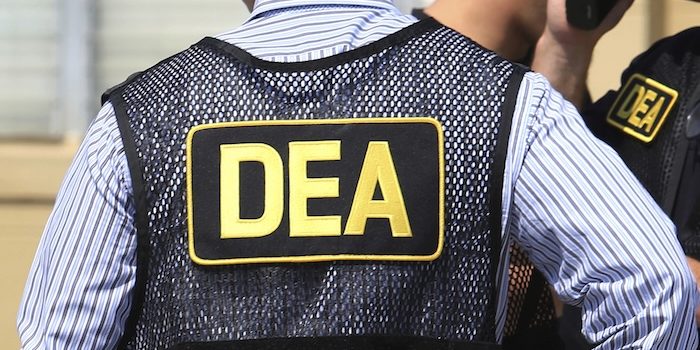
“While DEA agents may not have the resources to intercept every single known shipment, a policy directing them not to intercept significant shipments is unconscionable and undoubtedly resulted in considerable harm and lives lost,” Comer wrote, per the AP, which said it obtained a copy of the letter. The DEA did not immediately respond to a request for comment, according to the same reporting.
New Mexico flashpoint: whistleblowers and a lawsuit
The AP reported that officials in New Mexico—described as the epicenter of the fentanyl crisis—raised concerns after DEA whistleblowers said they were ordered to stand down instead of seizing hundreds of thousands of pills, potentially violating Justice Department safeguards. Last week, New Mexico Attorney General Raúl Torrez sued the Justice Department to obtain many of the same records Comer is seeking, according to the AP.
AP: Tactic spanned shifting policies and administrations
The AP investigation found that between 2023 and 2025, DEA agents in New Mexico allowed major fentanyl shipments to reach the streets while building out criminal cases, even as the agency led its “One Pill Can Kill” public‑awareness campaign. AP also reported that the White House last year designated fentanyl a “weapon of mass destruction.”
Per AP, a 2017 policy directed agents to “seize or otherwise prevent the distribution” of fentanyl “as soon as practicable.” The department rewrote those rules in 2024 to give law enforcement more discretion, citing “the benefits to be achieved through preserving the investigation,” AP reported.
AP further reported that the investigative strategy—sometimes described as allowing drugs to “walk”—continued into what it termed Trump’s second administration, leading up to what AP called the largest fentanyl bust in DEA history, announced in May 2025 by then‑Attorney General Pam Bondi. Authorities seized about 3 million fentanyl pills in that operation, AP reported, while larger quantities had gone unseized earlier as agents in Albuquerque watched couriers enter hotels with backpacks believed to contain up to 100,000 pills. A former DEA supervisor told AP the network could have been dismantled six months sooner.
Watchdog review and DEA’s response
AP reported that the Justice Department’s inspector general opened a nationwide review of policies and wiretap probes to determine whether the same tactic was used elsewhere. In a Fox News interview cited by AP, DEA Administrator Terry Cole welcomed the review, saying, “Our investigations are long term and they are complex and they are done under the guidance of the law. We will continue to do that, but we need to stay 100% focused on the adversary.”