Iran’s delegation to technical talks with the United States in Switzerland was not built like a narrow diplomatic mission, according to a counterterrorism expert cited by Fox News Digital.
Instead, Dr. Omar Mohammed of George Washington University’s Program on Extremism described Tehran’s team as a “whole-regime delegation” designed around money, security, legal protections and energy leverage.
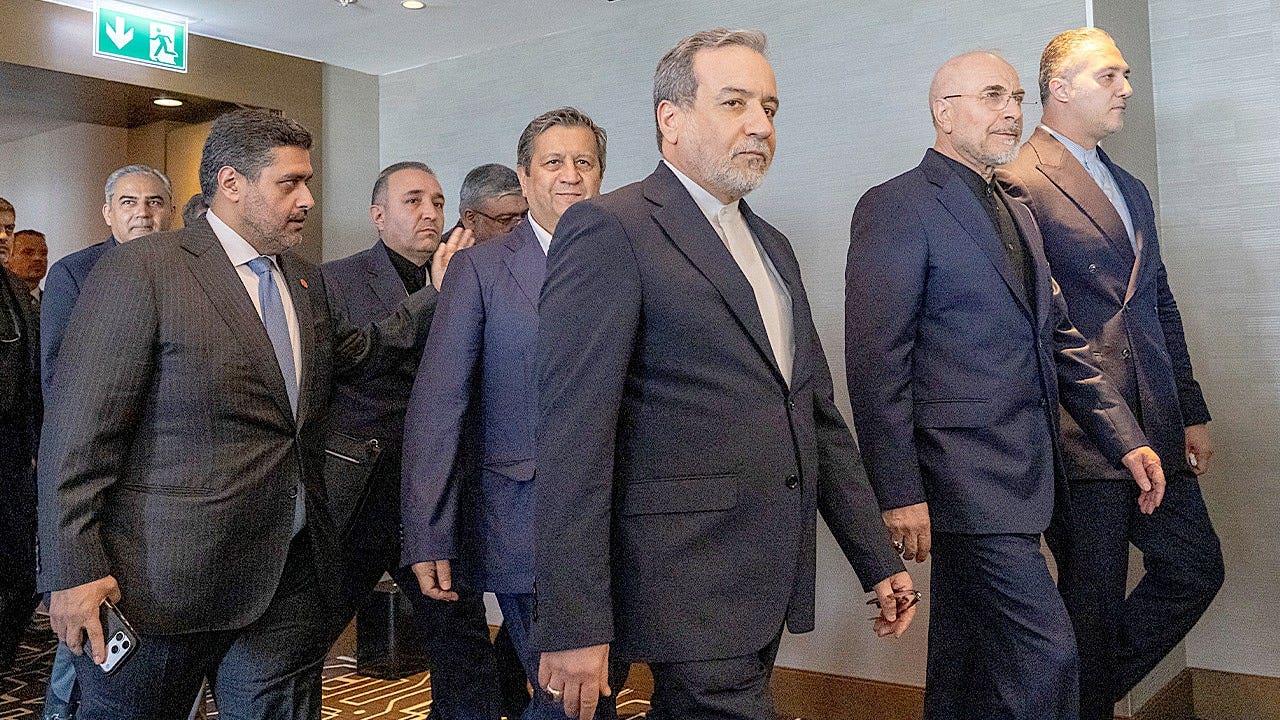
The talks at Bürgenstock followed what Fox described as a breakthrough memorandum of understanding between President Donald Trump and Iranian President Masoud Pezeshkian. Follow-up talks were later called off, adding uncertainty before the latest round.
A delegation built around implementation
Iranian state media confirmed that Tehran’s team was led by chief negotiator Mohammad Baqer Qalibaf and Foreign Minister Abbas Araghchi, according to the source report.
The delegation also included Abdolnaser Hemmati, governor of Iran’s central bank; Ali Bagheri Kani, deputy secretary of Iran’s Supreme National Security Council; Kazem Gharibabadi, a deputy foreign minister handling legal affairs; and senior oil and energy officials.
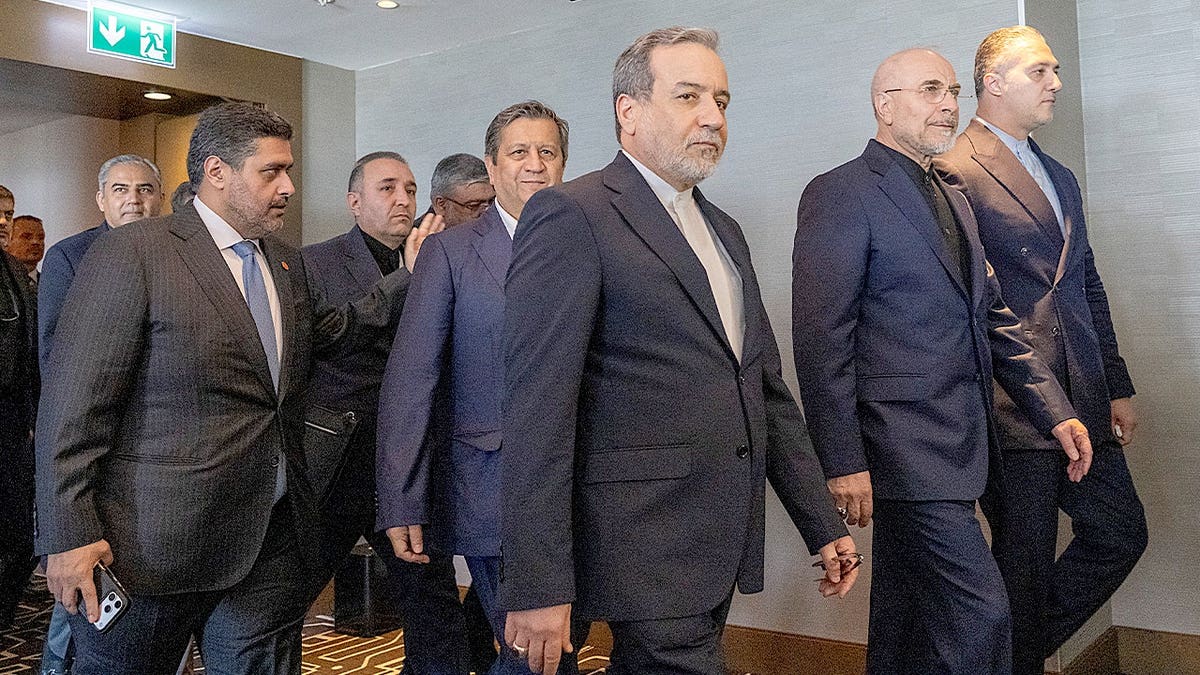
Mohammed told Fox News Digital that Iran had deliberately avoided sending only diplomats.
“Iran has not only sent diplomats; it has sent the foreign ministry, the security state, the central bank, legal affairs and oil,” he said. “This is a whole-regime delegation built around implementation, money, leverage and red lines.”
The money question
Mohammed argued that Hemmati’s presence was especially revealing because central bank officials are typically involved when negotiations move beyond symbolism and into financial relief.
“You do not send the central bank governor to a symbolic meeting,” Mohammed said. “You send him when the question is money: frozen assets, sanctions relief, banking channels, usable currency and how quickly Iran can turn promises on paper into cash it can actually spend.”
He also said the presence of oil and energy officials suggested that maritime security and energy leverage, including the Strait of Hormuz, were part of the strategic backdrop.
“If oil is in the room, Hormuz is in the room,” Mohammed told Fox. “For an American policymaker, that means maritime security and energy leverage.”
Washington’s team and a competing message
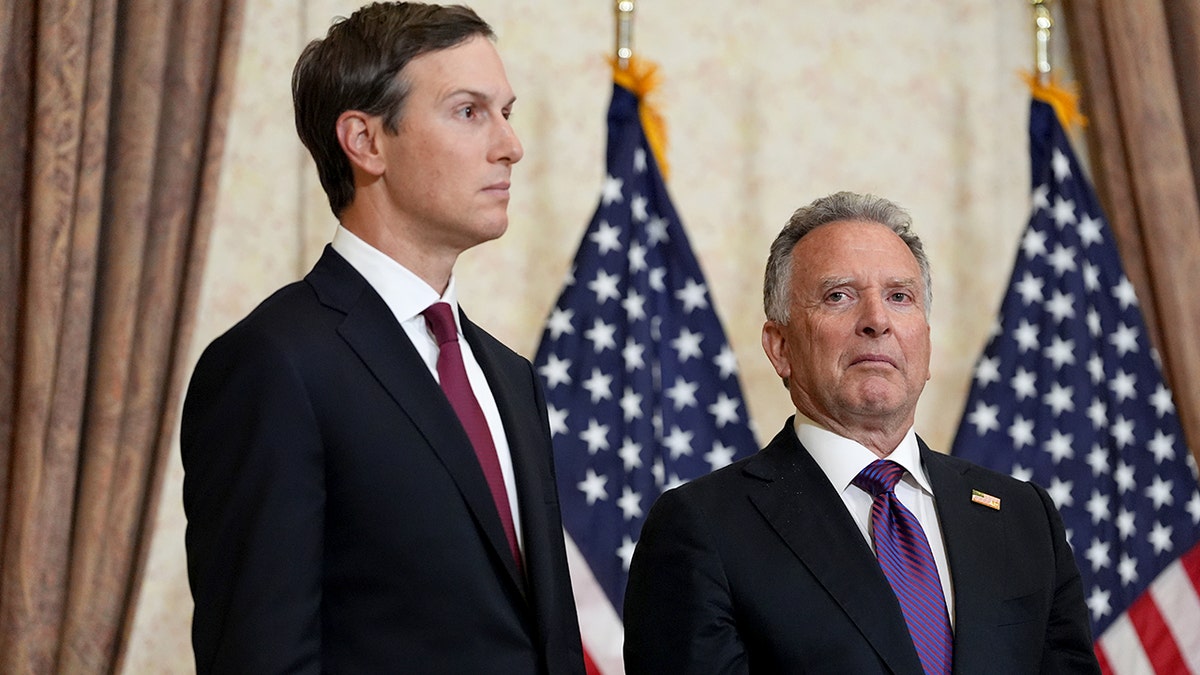
The U.S. delegation, according to the report, included Vice President JD Vance, U.S. Special Envoy for Peace Missions Steve Witkoff and former senior White House adviser Jared Kushner.
Vance said President Trump had asked for a “new leaf” in the U.S. relationship with Iran and that the Switzerland talks could help both sides work through unresolved issues, including the nuclear file and the Lebanon ceasefire crisis.
But the source report also cited Iran International, which said hardline lawmaker Mahmoud Nabavian read excerpts he described as top-secret letters from Supreme Leader Mojtaba Khamenei on Iranian state television. Nabavian alleged that the leader opposed nuclear talks, demanded compensation from Washington and insisted on Iranian control of the Strait of Hormuz before the live program was cut.
Expert warns against front-loaded concessions
Mohammed warned that the composition of Iran’s team could indicate an effort to secure early benefits while preserving pressure points for later rounds.
“If the money comes first and the concessions come later, Tehran will not interpret that as compromise,” he said. “It will interpret it as victory.”
He added that if Washington provides cash, oil access and legal protection while Iran retains leverage through Hormuz, proxies, missiles and nuclear options, “America has not bought peace. It has financed Iran’s next phase.”
Reuters reported that Sunday’s talks between Iran and the U.S. were paused but not ended.