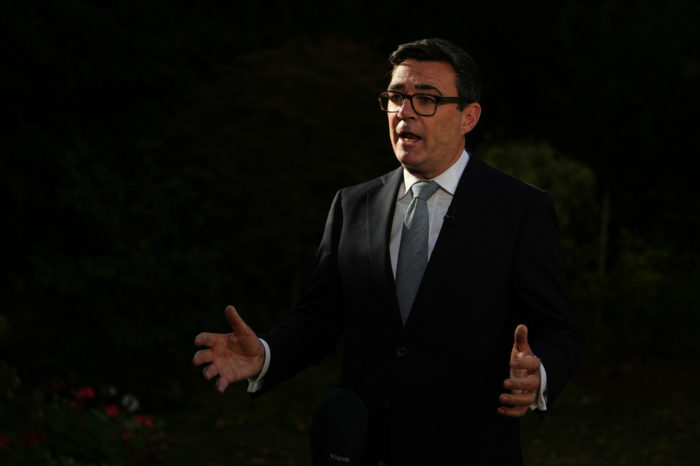
British Prime Minister Andy Burnham exchanged text messages with someone impersonating White House Chief of Staff Susie Wiles before recognizing the apparent deception and ending communications, according to multiple reports.
Politico first reported the incident after speaking with four unnamed officials familiar with the matter. Burnham reportedly believed he was communicating directly with Wiles, one of President Donald Trump’s closest advisers, during at least part of the exchange.
Burnham became suspicious after receiving several messages and reported the incident to the appropriate authorities. The British Embassy in Washington also notified the White House because of concerns that Wiles’ phone or another device might have been compromised.
A White House official said the episode did not involve any breach of Wiles’ devices. Neither government has publicly identified the person responsible for the messages or disclosed how the impostor obtained Burnham’s contact information.
A Downing Street spokesperson declined to provide details, citing a longstanding policy against discussing national security matters. Burnham later acknowledged the exchange but said no consequential information had been shared. He also rejected suggestions that he should be embarrassed, arguing that he recognized the problem and reported it.
The incident follows previous attempts to pose as senior members of the Trump administration.
In 2025, American authorities investigated messages sent to politicians, business leaders and other prominent figures by someone claiming to be Wiles. Some recipients reportedly received calls or messages that appeared to come from her personal contacts.
The State Department subsequently warned diplomats about an impostor pretending to be Secretary of State Marco Rubio. That individual used text messages, Signal and artificially generated voice recordings to contact at least three foreign ministers, a US senator and a governor.
The FBI has warned that malicious actors are increasingly using artificial intelligence to imitate the voices and writing styles of government officials. Such schemes may be designed to obtain confidential information, steal account credentials, request money or establish access to additional high-level targets.
Burnham took office less than a month before the impersonation attempt and has been working to establish a productive relationship with the Trump administration. Trump’s relationship with Burnham’s predecessor, Keir Starmer, began cordially before deteriorating over policy disagreements.
The contact therefore may have appeared credible because communication between the new British government and senior White House officials would be expected during a leadership transition.
Although officials have not reported the exposure of classified information, the incident demonstrates how easily modern impersonation tools can complicate diplomatic communications. Even without hacking an official device, an attacker can exploit publicly available information, convincing language and artificial intelligence to create the appearance of authentic contact.
The episode is likely to renew demands for stricter verification procedures whenever senior officials communicate outside established diplomatic channels.